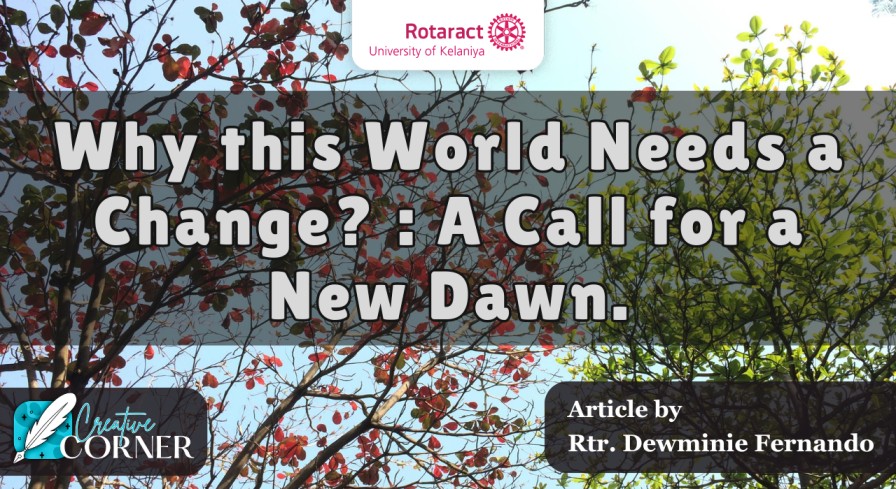
As we stand at the verge of a new era, the call for change resounds more urgently than ever. The world, in its current state, grapples with myriad challenges that demand our collective attention and action. From environmental degradation and social inequality to technological disruptions and political instability, the need for transformative change is evident. But why exactly does this world need a change? Let us delve into the heart of the matter.

1. The Planet’s Plea
Rising temperatures, melting ice caps, and increasing natural disasters signal a dire need for change as the environmental conditions of the world is at its worst. Our planet’s ecosystems, once teeming with life and balance, are now on the brink of collapse. To ensure a sustainable future for generations to come, we must heed the planet’s plea and embrace environmentally conscious lifestyles and policies. This means rethinking our energy sources, reducing waste, and preserving the natural world.
2. Bridging the Divide
In a world where technological advancements have the potential to connect and uplift, huge social inequalities persist. Economic disparities, racial injustices, and gender inequities continue to plague societies globally. The wealth gap widens as the rich grow richer and the poor languish in poverty. This imbalance breeds discontent and stifles progress. Change is imperative to create a more equitable society where opportunities are accessible to all, irrespective of their background. This involves reforming economic systems, ensuring fair wages, and promoting inclusive policies that uplift marginalized communities.
3. Navigating the Digital Age
The rapid pace of technological advancement has revolutionized our lives, but it also presents new challenges and despair. Automation and artificial intelligence threaten traditional job markets, leaving many workers displaced. The digital divide exacerbates educational and economic inequalities, while data privacy concerns loom large. To harness the benefits of technology while mitigating its risks, we need a change in how we approach innovation. This includes investing in education and training to prepare the workforce for future demands, as well as implementing regulations that protect individuals’ rights in the digital realm.
4. Restoring Trust and Cooperation
Around the globe, political systems are strained by corruption, populism, and eroding public trust. Polarization and divisive rhetoric undermine democratic institutions and fuel conflicts. To build a more stable and just world, we need a change in governance that prioritizes transparency, accountability, and the common good. This involves fostering dialogue and cooperation across political divides, ensuring fair and free elections, and promoting leaders who are committed to serving their constituents with integrity and vision.
5. Embracing Diversity and Creativity
In a world increasingly interconnected, embracing cultural diversity and creativity is essential. Yet, xenophobia, cultural erasure, and homogenization threaten the rich tapestry of human experience. We need a change that celebrates and preserves cultural identities while encouraging creative expression. This involves supporting the arts, protecting cultural heritage, and promoting intercultural dialogue and understanding. By doing so, we enrich our societies and cultivate a more vibrant, inclusive world.
The call for change is not merely a response to the challenges we face; it is a clear call for a better, more harmonious future. By addressing all these issues, we can forge a path toward a world that is more just, sustainable, and compassionate. This transformation requires collective effort, visionary leadership, and a steadfast commitment to the greater good. The world needs a change, and that change begins with each of us. Together, we can usher in a new dawn and create a legacy of hope and resilience for future generations.
Are you ready to drive that change?