
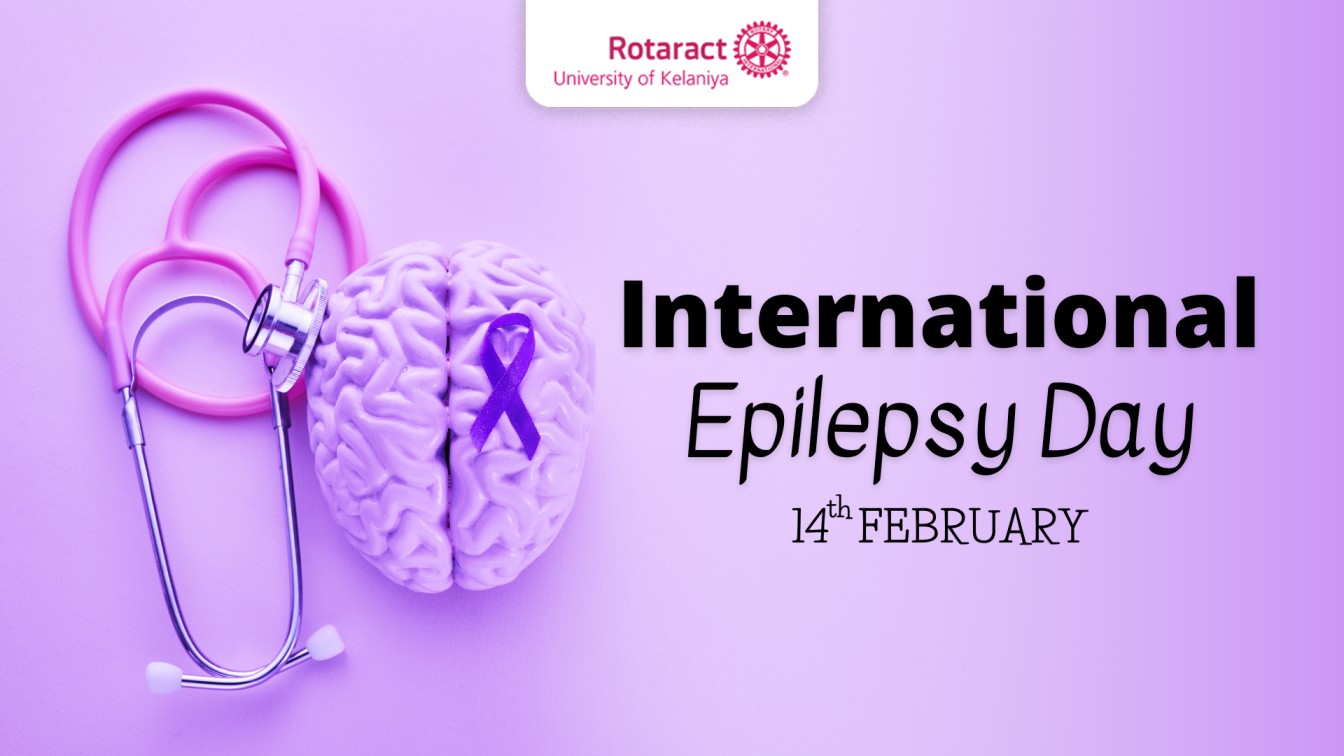

Every year as the 14th of February dawns, International Epilepsy Day is commenced to bring this seizure disorder to light. It acknowledges the challenges faced by people who live with Epilepsy, educates the general public on the disorder and teaches people how to provide appropriate care for people living with It.
Epilepsy is the state where the brain stops electrical activity for a short time, creating recurrent seizures. Epilepsy is incontaminable. While sometimes the seizures will lead to thrashing or jerking (tonic-clonic seizure) that is not the only form of it. Epilepsy also causes a person to wander around, and appear vacant and confused. A person experiencing an Epileptic seizure can lose control of their mind and body in terrifying ways. Different types of seizures carry different risks. The risk level depends on the type of seizures one has and their lifestyle.
It is one of the oldest recorded medical conditions in history from ancient Babylonians to Greeks. Albeit they associated seizures with possession by evil spirits or divine interventions. It is Hippocrates who rejected that Epilepsy is spiritual and treated it as a condition that is medically treatable originating in the brain.
At present time, it is recognised as the fourth most common neurological disorder. Epilepsy can disrupt the day-to-day life of a person, making them unable to participate in mundane activities such as driving. Every year, more than one in 1,000 people die suddenly due to epilepsy attacks. Part of this is because people, even medical professionals, lack information and knowledge regarding appropriate treatment for Epilepsy in many countries. This is a rather bleak reality considering that Epilepsy is manageable via medication and undergoing necessary surgeries.
It is noteworthy that around 65 million people in the world have Epilepsy. Despite this, there is a stigma surrounding the disease. Unfortunately, due to these circumstances, a surge of misinformation regarding Epilepsy can be seen in society. Hence, it is of paramount importance to break cultural silence regarding Epilepsy. Which is exactly why there is a special day catered for it.
Thus, on International Epilepsy Day, one can don purple, the colour reserved for this special day and work on bringing awareness to Epilepsy, establishing a stage for people who live with it.