In the heart of Sri Lanka, where history whispers through ancient temples and the air is thick with the scent of incense, the Dalada Perahera unfolds each year as a living tapestry of devotion, culture, and unbroken tradition. This is not merely a festival but a grand spectacle, a vibrant expression of Sri Lanka’s soul, where the past and present get together in a harmonious celebration of faith.

The Dalada Perahera, also known as the Esala Perahera, is a centuries-old Buddhist procession held in Kandy, the island’s cultural capital. It is a tribute to the Sacred Tooth Relic of the Buddha, enshrined within the hallowed walls of the Temple of the Tooth. This relic is not just a religious artifact; it is a symbol of sovereignty, believed to grant divine right to those who possess it. For over a thousand years, it has inspired reverence, unity, and a sense of continuity among the Sri Lankan people.
As the festival begins, the city of Kandy transforms into a stage where tradition comes alive. Each night, for ten days, the streets pulse with the energy of the Perahera. There are three types of perahera in Dalanda Perahera known as Kumbal Perahera, Randoli Perahera & Dawal Perahera.
The Kumbal Perahera is the initial event of the Dalada Perahera, usually held during the first five days of the festival. It is considered less elaborate and more subdued compared to the Randoli Perahera. However, it still involves a grand procession with elephants, dancers, drummers, and other performers. The Kumbal Perahera is seen as a blessing ceremony for the city and its people, marking the start of the festival. It is often viewed as a preparatory stage, gradually building up the grandeur and intensity of the event. This event is more accessible to local devotees, allowing them to receive blessings before the larger crowds arrive for the later stages.
The Randoli Perahera is the latter and more prominent event of the Dalada Perahera, occurring during the final four nights, leading up to the Dawal Perahera. The Randoli Perahera is more lavish and spectacular, featuring richly decorated elephants, more elaborate costumes, and a larger number of participants. The Maligawa Tusker carries the golden casket containing the Sacred Tooth Relic’s replica. This event is the climax of the entire festival. The name “Randoli” refers to the palanquins (rando:li-do:la:wa) carried during the procession, which historically symbolized the participation of the queen’s entourage. The Randoli Perahera attracts larger crowds, including both local and international visitors, and is the highlight of the festival due to its grandeur and spiritual significance.
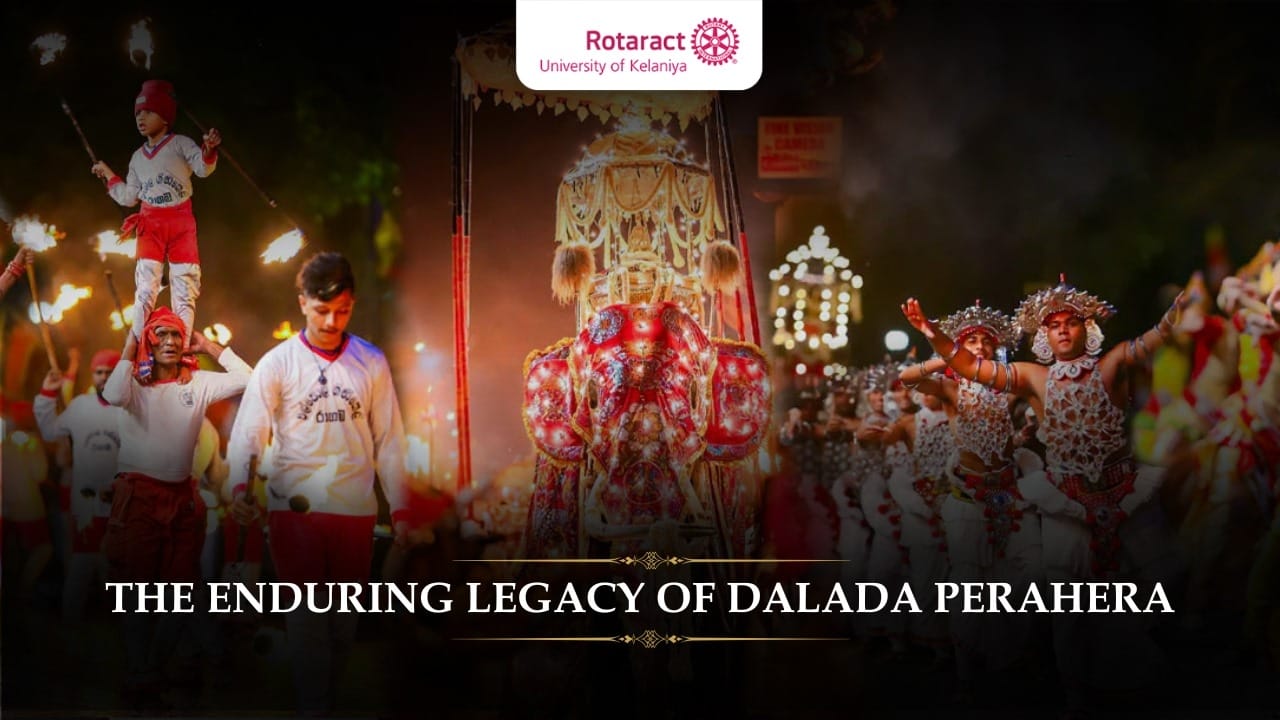
Dalada Perahera ends with the Dawal Perahera, marking the final day of the festival. After the Dawal Perahera, the procession and the festival as a whole come to an end. The procession, a dazzling river of light and color, winds its way through the city, led by the majestic Maligawa Tusker, an elephant adorned in gold and crimson, bearing a replica of the Sacred Tooth Relic casket. This noble creature, with its gentle, measured stride, embodies the reverence of the entire nation.
Behind the Tusker, a procession unfolds that is as much a visual feast as it is a spiritual journey. The air hums with the rhythm of Kandyan drums, their beats echoing like the heartbeat of the island itself. Dancers clad in traditional attire leap and spin in a timeless ballet, their movements echoing the stories of gods and heroes. Flame bearers sway, creating arcs of fire that light up the night, their flames reflecting in the wide eyes of the onlookers who gather in awe.
Yet, the Dalada Perahera is more than a parade; it is a narrative in motion, a story told through the ages. It is the tale of a nation’s faith, resilience, and reverence for the sacred. Every step taken in the procession, every beat of the drum, and every flicker of the lamp carries the weight of history and the hopes of the future. It is a reminder that tradition is not static but a living, breathing entity that evolves yet remains rooted in the core values that define a culture.
In this convergence of past and present, the Dalada Perahera is a beacon, guiding the Sri Lankan people in their journey through time. It is a celebration of continuity, where the sacred and the secular intertwine, creating a legacy that is as enduring as the island itself. As the final night of the Perahera draws to a close, the echoes of the drums and the flicker of the lamps linger in the hearts of those who witness it, a testament to the enduring spirit of Sri Lanka and the timeless tradition of the Dalada Perahera.