
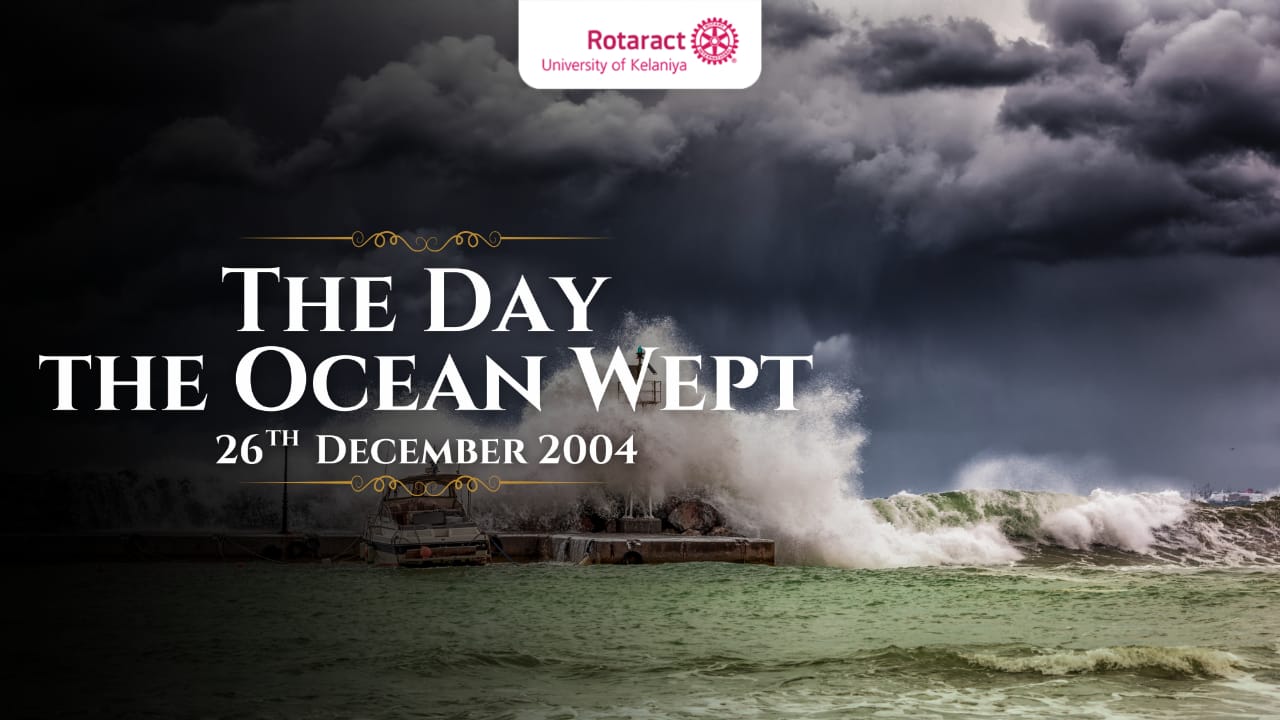
On December 26, 2004, the world witnessed one of the deadliest natural disasters in history, Tsunami. Sri Lanka, an island nation nestled in the heart of the Indian Ocean, was among the worst affected. This catastrophic event, caused by a massive undersea earthquake near the coast of Sumatra, Indonesia, left an indelible mark on the lives of millions and became a day of mourning for the entire nation. It was the day the ocean wept.
It began like any other peaceful Sunday morning. Families were preparing breakfast, children were playing, and fishermen were returning from the sea with their morning catch. However, beneath the ocean’s calm exterior, a colossal tectonic shift had occurred. The 9.1-magnitude earthquake released an immense amount of energy, triggering powerful waves that raced across the Indian Ocean at speeds exceeding 800 kilometers per hour.
A tsunami travels at speeds of around 500 miles per hour (805 kilometers per hour), which is similar to the speed of a jet airliner.

As the waves approached Sri Lanka’s shores, they grew into towering walls of water, crashing down with devastating force. The coastal areas of the island, particularly in the southern, eastern, and northern provinces, bore the brunt of the destruction. Entire villages were swept away in seconds, leaving nothing but debris and despair in their wake.
The human toll was staggering. Over 30,000 lives were lost in Sri Lanka alone, and thousands more were injured or missing. Families were torn apart, with many children left orphaned and parents left childless. The waves spared no one, young or old, rich or poor.
The 2011 earthquake off the coast of Tōhoku, in Japan, has been considered the world’s most expensive disaster in the history of humankind at $232 billion. And Japan is still building giant concrete walls along parts of the coastline to defend people from tsunamis.
The physical devastation was equally profound. Homes, schools, hospitals, and infrastructure were obliterated. In coastal towns like Galle, Batticaloa, and Ampara, entire communities were reduced to rubble. Fishing boats, the lifeline of many families, were destroyed, leaving thousands without livelihoods.
Amidst the chaos, there were countless acts of heroism and humanity. Strangers risked their lives to save others, forming human chains to pull victims from the raging waters. Local communities opened their homes to shelter the displaced, sharing what little they had.
Whenever a tsunami is about to hit the coast, the ocean appears to drain away – the episode is called “drawback”.
The global response was overwhelming. Nations from around the world extended their support, sending aid in the form of food, water, medical supplies, and volunteers. Humanitarian organizations worked tirelessly to provide relief and help survivors rebuild their lives.
The tsunami was a wake-up call for Sri Lanka and the world. It highlighted the importance of disaster preparedness and early warning systems. In the years that followed, Sri Lanka invested in developing its disaster management infrastructure, including the establishment of the Disaster Management Centre and the installation of tsunami warning towers along the coast.
The the biggest Tsunami ever was recorded measured 1,720 feet (524 meters) and took place on July 9, 1958, in Lituya Bay, in the southeast of Alaska.
The tragedy also underscored the resilience and strength of the Sri Lankan people. Despite the immense loss, communities came together to rebuild, showing remarkable determination to rise from the ashes.
Nearly two decades later, the memory of December 26, 2004, remains etched in the hearts of Sri Lankans. It is a day of mourning, reflection, and remembrance for those who were lost. Annual commemorations and religious ceremonies are held across the country to honor the victims and to remind future generations of the importance of respecting and protecting nature.
While the pain of loss never truly fades, the tsunami also taught valuable lessons about resilience, compassion, and the importance of preparedness. It brought communities closer and fostered a sense of global solidarity.
The day the ocean wept will forever be remembered not only as a day of immense tragedy but also as a testament to the strength of the human spirit in the face of unimaginable adversity.