
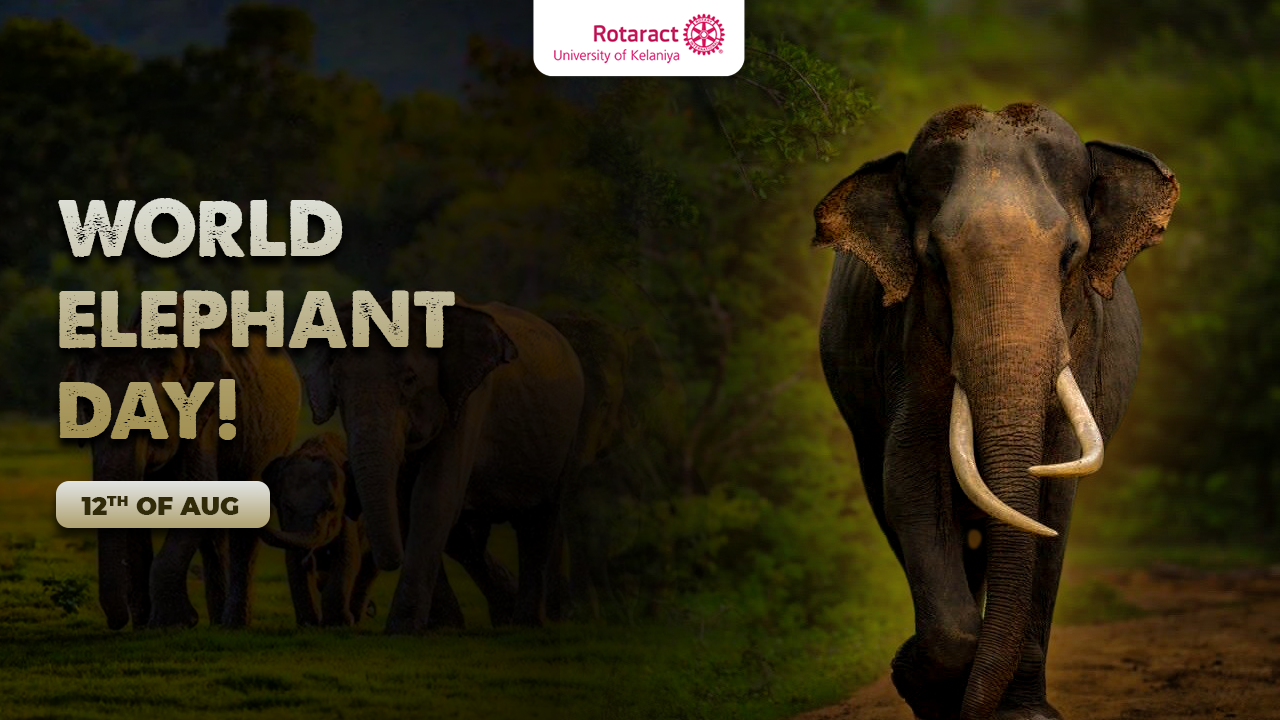
Elephants are more than just animals. They are symbols of nature’s strength and heritage, reminding us why protecting them matters.

World Elephant Day, observed on August 12, raises awareness about protecting elephants, their habitats, and ensuring their survival for future generations.
Elephants are the largest land animals on Earth, distinguished by their long trunks, tusks, large ears, and grayish skin. There are two types of elephants found around the world: African elephants and Asian elephants. African elephants are mostly found in sub-Saharan areas, as well as in West and Central Africa. Asian elephants can be found in Thailand, Sri Lanka, and India. Usually, African elephants are larger than Asian elephants, but Asian elephants are known for their gentle nature and are often considered the most beautiful of the two species.
Sri Lanka has about 7,000 wild elephants, representing around 14% of Asia’s elephant population and about 2% of the global population. Compared to other countries, Sri Lanka has a significant number of elephants. From ancient times, we have maintained a close bond with these majestic animals. King Dutugemunu’s royal tusker Kandula is a well-known example of this friendship.
Among Buddhists, elephants are used in the Kandy Esala Perahera. When speaking about the Perahera, we cannot forget the legendary tusker Raja, who carried the Sacred Tooth Relic for 37 years in a row. In recognition of his service, Raja was declared a national treasure, and his body has been preserved and displayed at the Raja Tusker Museum.
For these reasons, elephants are extremely important and precious to Sri Lanka. They are also one of the main attractions for tourists visiting our little island.
However, elephants face serious challenges both globally and locally. One of the biggest issues is human–elephant conflict. According to reports, this problem results in the deaths of about 250 elephants and 80 humans annually. Urbanization, agriculture, and deforestation have reduced elephants’ natural habitats, forcing them closer to human settlements.
Some solutions to these problems include raising community awareness, reforestation, planting palm trees to create natural barriers, and minimizing the establishment of villages near forests.
In conclusion, just as the Gajaga Wannama echoes in every Sri Lankan’s heart, our commitment to protect these amazing animals must be unwavering. Their survival is essential for a better and safer world.