
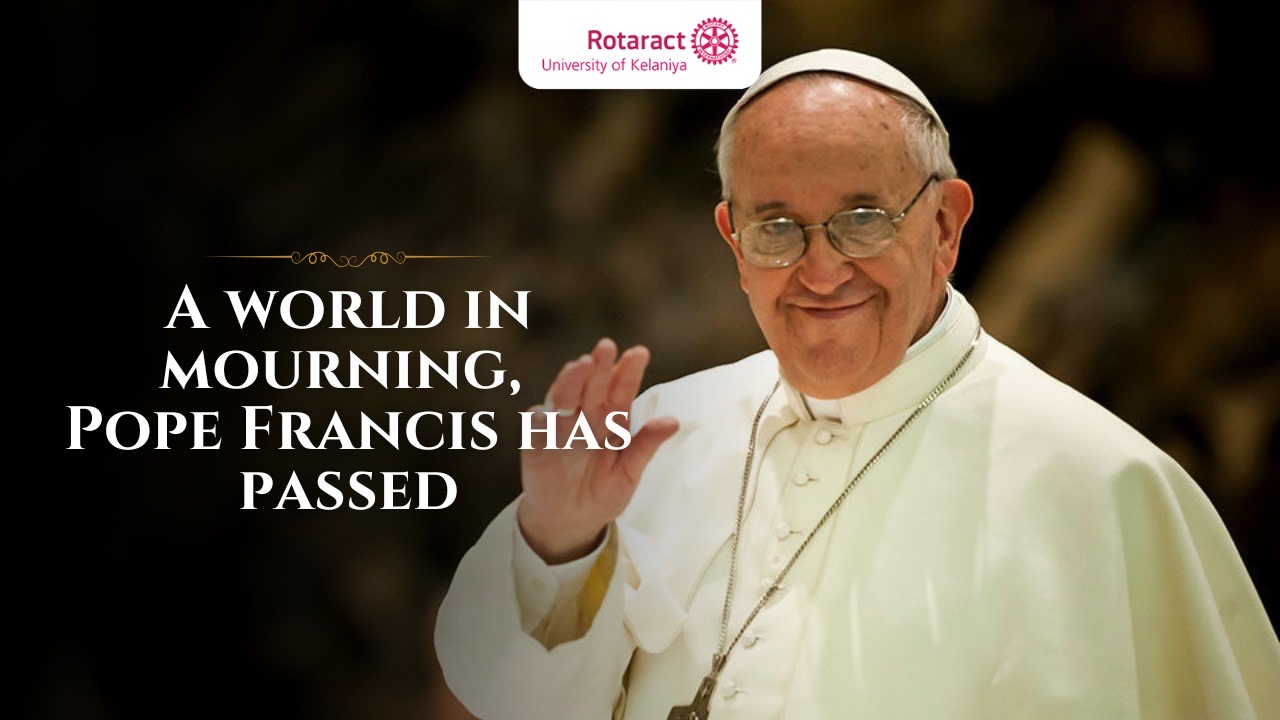
In the papal history, few figures have captured the hearts of the faithful and the curious alike quite like Pope Francis. As the 266th pontiff of the Roman Catholic Church, he has redefined the papacy in the 21st century—not with grand proclamations or rigid doctrines, but with humility, compassion, and a bold call to serve the world’s most vulnerable.
Pope Francis was born Jorge Mario Bergoglio on December 17, 1936, in Buenos Aires, Argentina. He was the eldest of five children in a family of Italian immigrants. Before choosing a religious path, young Jorge earned a diploma as a chemical technician and worked in a food science laboratory. However, his calling to the priesthood was undeniable.
He entered the Society of Jesus—the Jesuits—in 1958, and was ordained a priest in 1969. Over the years, he rose within the ranks of the Church, eventually becoming Archbishop of Buenos Aires in 1998 and a cardinal in 2001. On March 13, 2013, following the resignation of Pope Benedict XVI, the world watched with anticipation as white smoke rose from the Sistine Chapel. The announcement of “Habemus Papam” (“We have a Pope”) introduced the world to a humble Argentine who had taken the name Francis—a first in papal history. The name paid tribute to St. Francis of Assisi, a saint known for his dedication to peace, poverty, and care for creation.
Pope Francis quickly gained attention for his unorthodox approach. He shunned many of the formal trappings of his office—opting to live in the modest Vatican guesthouse rather than the grand Apostolic Palace. His first gestures as pope included paying his own hotel bill and washing the feet of prisoners, including Muslims and women, during Holy Week.
He became a voice for the marginalized—refugees, the poor, the sick, and those on the fringes of society. His message was clear: the Church must be a “field hospital” for the wounded, not a fortress for the self-righteous.

Earlier this year, Pope Francis faced a grave health crisis when he was hospitalized for five weeks with double pneumonia. According to his medical team, his condition became so critical at one point that they considered halting treatment to allow him to pass peacefully. Yet, in characteristic fashion, Francis defied the odds—emerging briefly to fulfill his Holy Week commitments despite his frailty.
However, on Easter Monday, the Vatican announced the passing of Pope Francis at the age of 88. The beloved pontiff, renowned for his unwavering voice for the poor and his courageous efforts to reshape the Catholic Church, died the morning after Christianity’s most sacred celebration—the Resurrection of Jesus Christ.
Though his health had visibly declined, Francis made several public appearances during Holy Week, culminating in an emotional Easter Sunday blessing that drew thousands to St. Peter’s Basilica. On Monday, the Vatican confirmed that he passed away peacefully at Casa Santa Marta, the Vatican guesthouse he had chosen as his home since his election in 2013—eschewing the traditional papal apartments in keeping with his lifelong commitment to simplicity and humility.