
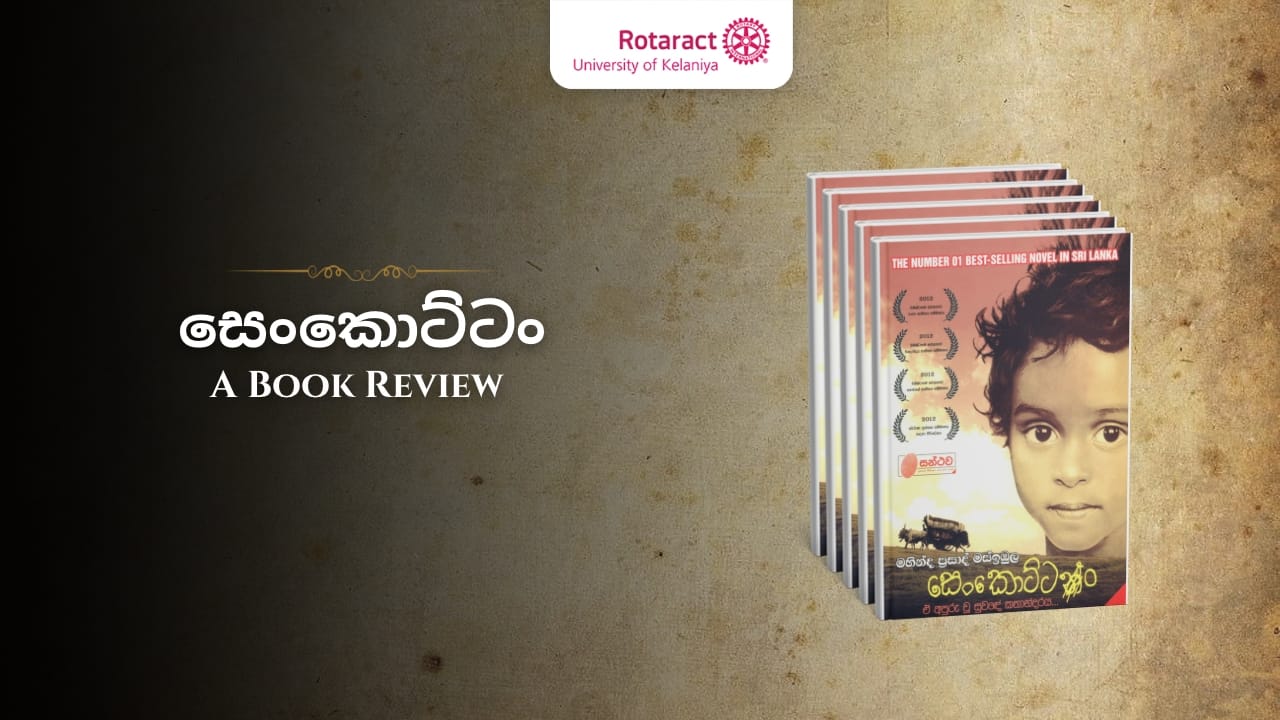
Senkottan, written by Mahinda Prasad Masimbula, is a one of my favorite novels that I have read only once. It describes well the social structures, caste dynamics, and human relationships by exploring the complexity of Sri Lankan village life. The story flow through themes of social discrimination, love and struggle for the socialized identity.
The novel had been written mainly based on a one caste in Sri Lanka. In ancient time there were people who washed clothes of others as their occupation. They all have been introduced as a caste named ‘Radaa (රදා)’ in the society and they were somehow kept a low profile because of the social hierarchies. Senkottan follows the lives of those people. There have some roles that need to give a special attention while reading. Also there has some situations that we really have to think not once or twice, may be multiple times that why it happened in that way.

Well, I already told in above that I read this only once. You’ll know why, once you read the book. In this story there are many characters. Let me introduce some of them without splitting beans:).
Weerappuli Heanya, the husband of Malma Ridee & the father of Podina and Heen Ridee, is a man who lived to serve others in his entire life. In the 1st chapter of the story, author explains well that how he regrets to be a part of low caste because of how society treated to those low castes. Malma Ridee is a silent observer, viewing the world with a calm, balanced perspective, neither judging nor taking sides. Podina, a character who has an unexpected fate in this story, is the wife of Nambu Heanaya, a man who lives as good for nothing. Podina & Nambu Heanaya have a child named Baba Heanaya. Heen Ridee is the younger sister of Podina and she was married to Babanis, a hunter who loves to kill animals to fulfil his greedy desire. Basically those are the main roles that can meet through this story. When you start to read it you’ll imagine the story with those roles.
Well, what is Senkottan? Why did the author use this name for this novel? Those are may be some questions that you dying to know the answer before reading the book. Senkottan is a fruit that looks same as a cashew nut. ‘Semecarpus anacardium’ is the botanical name. This fruit has a bitter taste but its more valuable as an herb. Parts of this tree use for different purposes. For those who loves to do more researches about this Senkottan tree, they can search as ‘Marking Nut Tree’, through the google. As for this novel, it was based on a caste that washing clothe as their occupation. When they wash the clothes they use this Senkottan fruits but It hasn’t described in the book that how they use this fruit. So, in my POV I think the author used this name because he wanted to give a proper identity to this people without introducing as a low caste. Also this Senkottan is more than related to their occupation.
Senkottan is a powerful novel that deeply resonates with readers’ due to its emotional intensity and profound themes. When you go through the book you’ll be think that some parts were written including lust for attention. But while you read the book, some situations will explain you that how was the countryside rural society without a proper education. I was particularly drowning in Podina’s character while reading, whose feelings and emotions were pure as a woman. However, you might find it curious in certain parts, as the author dig in deeply into the internal monologues & cultural descriptions.
This novel is not just a story but a commentary on the human condition making it a must-read for lovers of literature that explores societal issues. If you haven’t read this masterpiece yet, then I kindly invite you to enjoy it.




good review :0