
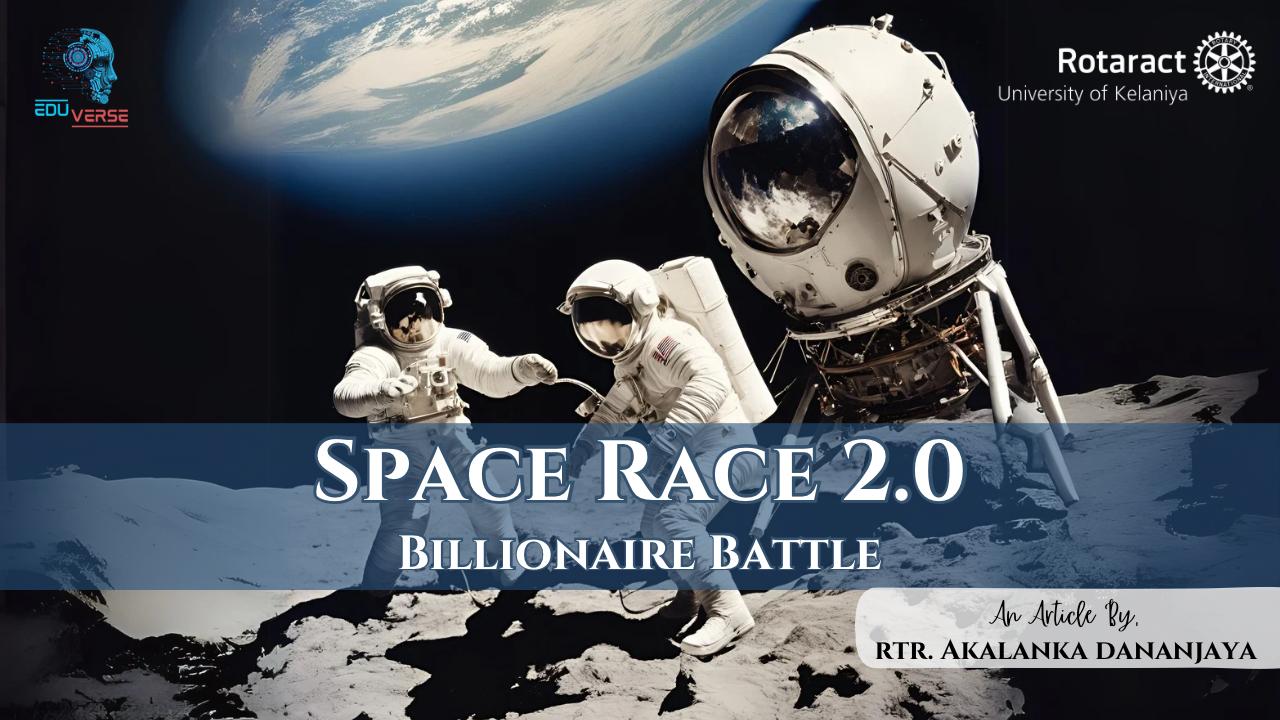
The space race of the 20th century was a geopolitical duel, pitting nations against each other in a quest to conquer the cosmos. Fast forward to today, and the race has taken on a new form a high-stakes competition between billionaires with dreams of reaching the stars.
Welcome to Space Race 2.0, where innovation, ambition, and a touch of ego are propelling humanity into uncharted territories.
THE PLAYERS IN THE NEW SPACE RACE
Elon Musk, Jeff Bezos, and Richard Branson are the titans of this modern space narrative, each with a unique vision for the final frontier. Musk’s SpaceX has been making headlines with its groundbreaking reusable rockets, slashing the cost of space travel. Bezos’s Blue Origin dreams of building floating cities in space, while Branson’s Virgin Galactic is pioneering sub-orbital space tourism.
Each of these billionaires has injected their companies with a personal touch. Musk named SpaceX’s spacecraft “Dragon” after the song Puff, the Magic Dragon, in response to critics who doubted his vision. Meanwhile, Bezos named Blue Origin to emphasize Earth’s “blue” origins, focusing on the importance of preserving our planet while expanding humanity’s reach into space.
MILESTONES THAT REDEFINED SPACE EXPLORATION
In 2021, Richard Branson became the first of the trio to venture into space aboard Virgin Galactic’s VSS Unity, narrowly beating Bezos’s flight aboard Blue Origin’s New Shepard by a matter of days. Both flights were short but symbolic, signaling the dawn of commercial space tourism.
SpaceX, however, has dominated the headlines with its technological feats. In 2023, its Starship rocket became the most powerful ever launched, marking a major leap in heavy-lift capabilities. SpaceX also leads in satellite launches, with its Starlink program boasting over 4,000 satellites in orbit, providing internet access across the globe.
On the other hand, Blue Origin is focusing on long-term sustainability. The company is developing the New Glenn heavy-lift rocket, named after astronaut John Glenn, and aims to make space infrastructure a reality. Bezos envisions millions of people living and working in spacea dream he’s nicknamed “O’Neill’s vision,” after physicist Gerard K. O’Neill.

TRIVIA THAT ADDS STARDUST
– Did you know SpaceX’s Falcon rockets are named after the Millennium Falcon from Star Wars?
– Virgin Galactic’s spaceflights include a weightless experience at the edge of the atmosphere, lasting about four minutesenough time to snap a selfie with Earth as the backdrop.
– Blue Origin’s New Shepard is named after Alan Shepard, the first American in space, and its capsule features the largest windows ever used in a spacecraft for breathtaking views.
CHALLENGES AND CRITIQUES
The race isn’t without controversy. Critics question the environmental impact of rocket launches, which emit significant carbon dioxide and other pollutants. Others argue that the billions spent on space tourism could be better used to address global challenges like poverty and climate change.
Additionally, the influx of satellites from companies like SpaceX and Amazon’s Project Kuiper has raised concerns about space debris and its potential to obstruct astronomical research.
THE FUTURE BECKONS
Despite the challenges, Space Race 2.0 has rekindled humanity’s fascination with the stars. It’s not just a race to reach spaceit’s a race to redefine what’s possible. As Musk dreams of colonizing Mars, Bezos envisions cities in orbit, and Branson brings space tourism to the masses, one thing is clear: the final frontier is no longer the exclusive domain of nation-states.
The billionaire space race is a reminder that the sky is not the limited just the beginning. Whether their dreams will lead to a golden age of exploration or create new challenges remains to be seen. What’s undeniable, however, is that we’re witnessing history in the making, one rocket launch at a time.