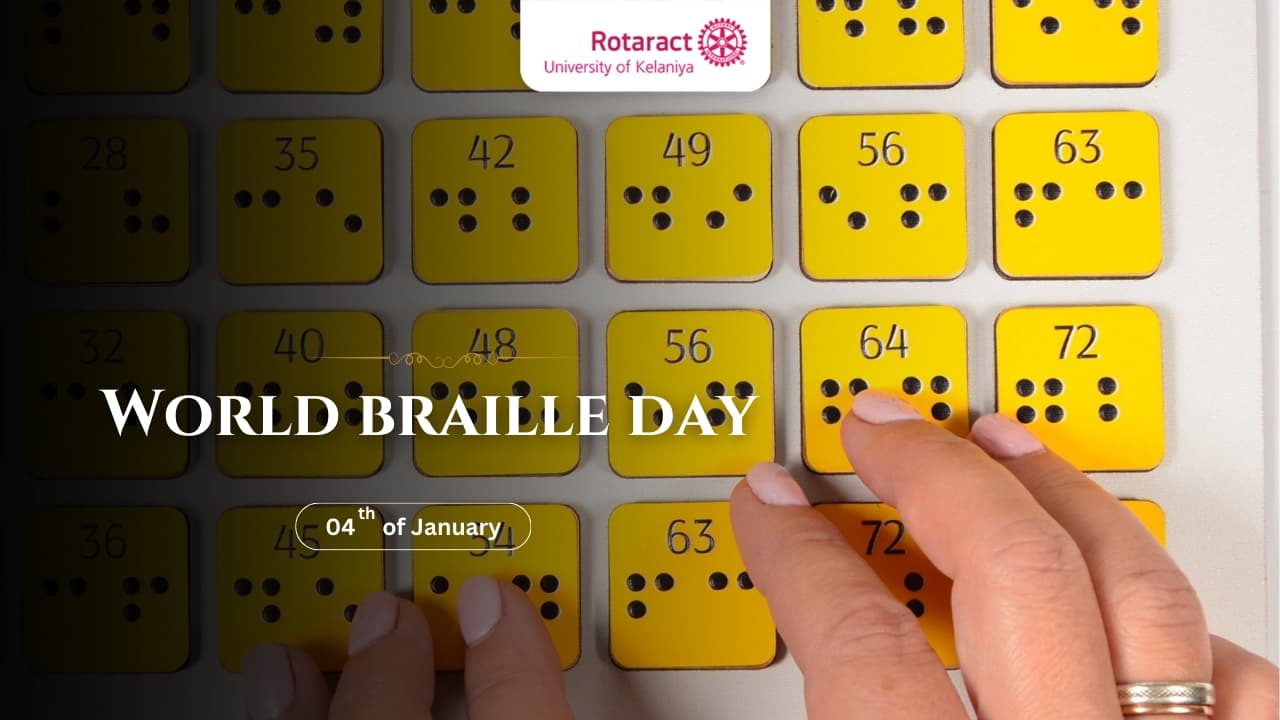
World Braille Day is observed every year on January 4th. It’s a day to honor the life and work of Louis Braille, the French inventor who created the Braille system. This system, used by blind and visually impaired people, allows them to read and write, making a huge difference in their lives. The day helps raise awareness about the importance of Braille and promotes equal access to education and information for people with disabilities.
Braille is a system of raised dots that represent letters, numbers, and punctuation. People read it by feeling the dots with their fingertips. Louis Braille invented this system when he was just 15 years old, after losing his sight in an accident. The system is now used around the world by millions of people to read books, newspapers, and signs.
World Braille Day is important because it reminds us that literacy and education are basic human rights. For those who are blind or have low vision, Braille is a key tool for independence. It allows them to access information, improve their skills, and participate in society fully. On this day, organizations and communities come together to share knowledge about Braille and advocate for greater accessibility in education and public spaces.

Different events are held on World Braille Day to honor Braille. These may include educational programs where schools and libraries host workshops to teach people about Braille and how it helps those with visual impairments. Public awareness campaigns are also organized by various groups to spread information about the importance of Braille and encourage more people to learn it. Additionally, fundraisers and charity events may be held by organizations to support resources and technology that make Braille books and tools more available.
In today’s digital age, Braille is not just found in books and on paper. Technology has made it easier for blind people to access digital information through Braille e-readers, which display electronic text in Braille. Computers, smartphones, and tablets can also be equipped with software that translates text into Braille. This allows people with visual impairments to read messages, emails, and websites just like anyone else.
World Braille Day is also a reminder that accessibility is an ongoing challenge. While Braille is essential, there is still much work to be done to ensure equal access to education, employment, and public services for people with visual impairments. Many countries are working to improve infrastructure, such as adding Braille signs on public transportation, buildings, and streets.
On January 4th, take a moment to think about the importance of Braille and the people it serves. World Braille Day is more than just a celebration of a system; it’s a call to action for more inclusion and equal opportunities for blind and visually impaired individuals. By supporting Braille and advocating for accessibility, we can help create a world where everyone has the chance to succeed, no matter their abilities.