
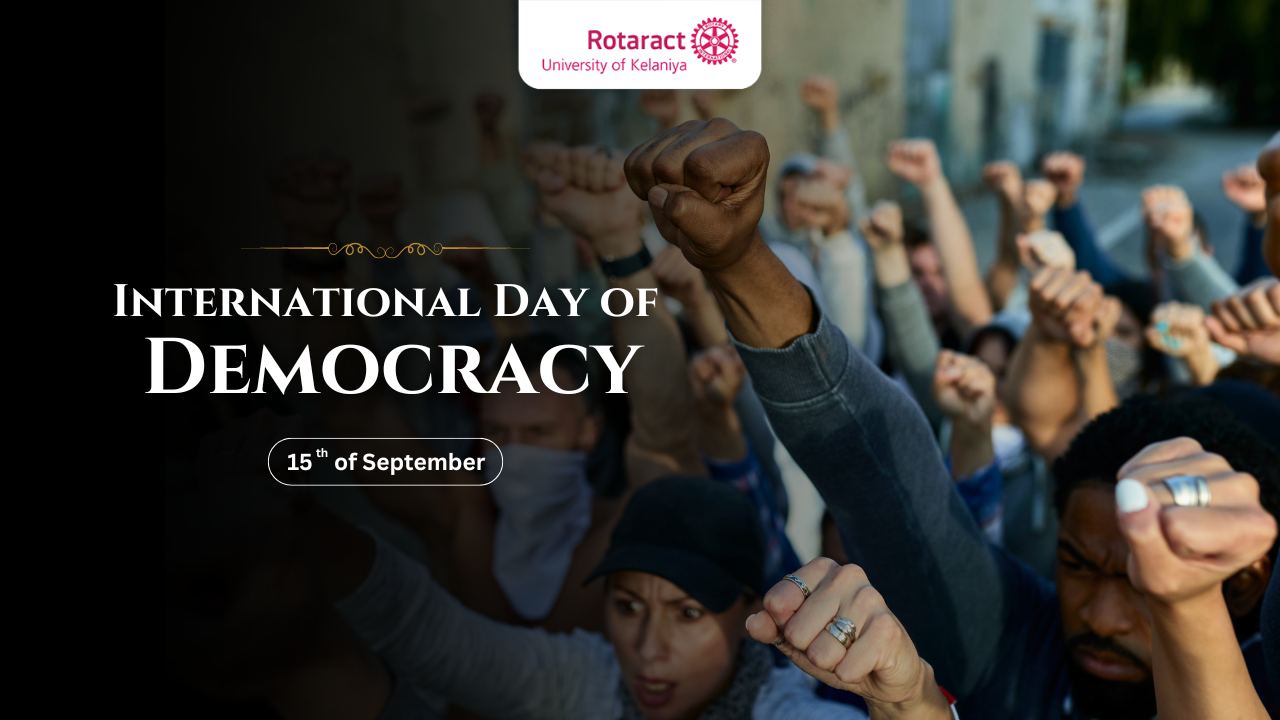
“Democracy is not a form of government; it’s a way of life” – Abraham Lincoln
September 15th marks the International Day of Democracy, a global commemoration of the principles and practices of democratic governance. Democracy, derived from the Greek words “demos” (people) and “kratos” (rule), signifies the power of the people to shape their own political destinies. It is a cornerstone of human rights, fostering equality, justice, and the well-being of individuals and societies.
The concept of democracy has evolved over centuries, with ancient Greece serving as a pioneer. However, it wasn’t until the 18th and 19th centuries that democratic ideals gained widespread traction, culminating in revolutions and the establishment of democratic republics in countries like the United States and France. Today, democracy is a cherished value in many parts of the world, though its implementation varies significantly across nations.
Democracy is more than just a system of government; it is a way of life that empowers citizens to participate in the decision-making processes that affect their lives. In democratic societies, individuals have the right to vote, express their opinions freely, and hold their governments accountable. This fosters a sense of ownership and civic responsibility, leading to more equitable and just societies.

One of the key principles of democracy is the rule of law, which ensures that all individuals are treated equally under the law and that no one is above it. This principle is essential for protecting human rights, preventing corruption, and promoting social justice. Additionally, democratic governments often have checks and balances in place, such as separation of powers, to prevent the concentration of power in the hands of a few.
Despite its many benefits, democracy is not without its challenges. In some countries, democratic institutions are fragile, and the rights of citizens may be threatened by authoritarian regimes. Furthermore, the growing digital age has raised concerns about the potential for misinformation and manipulation to undermine democratic processes.
To ensure the continued success of democracy, it is essential to promote civic education and empower citizens to participate meaningfully in their societies. This can be achieved through initiatives such as voter education, youth engagement, and the strengthening of civil society organizations. Additionally, it is important to address the root causes of inequality and injustice, as these can erode public trust in democratic institutions. In conclusion, the International Day of Democracy is a reminder of the importance of upholding democratic principles and values. By working together to promote democracy, we can create a world where all individuals have the opportunity to live in peace, security, and dignity.