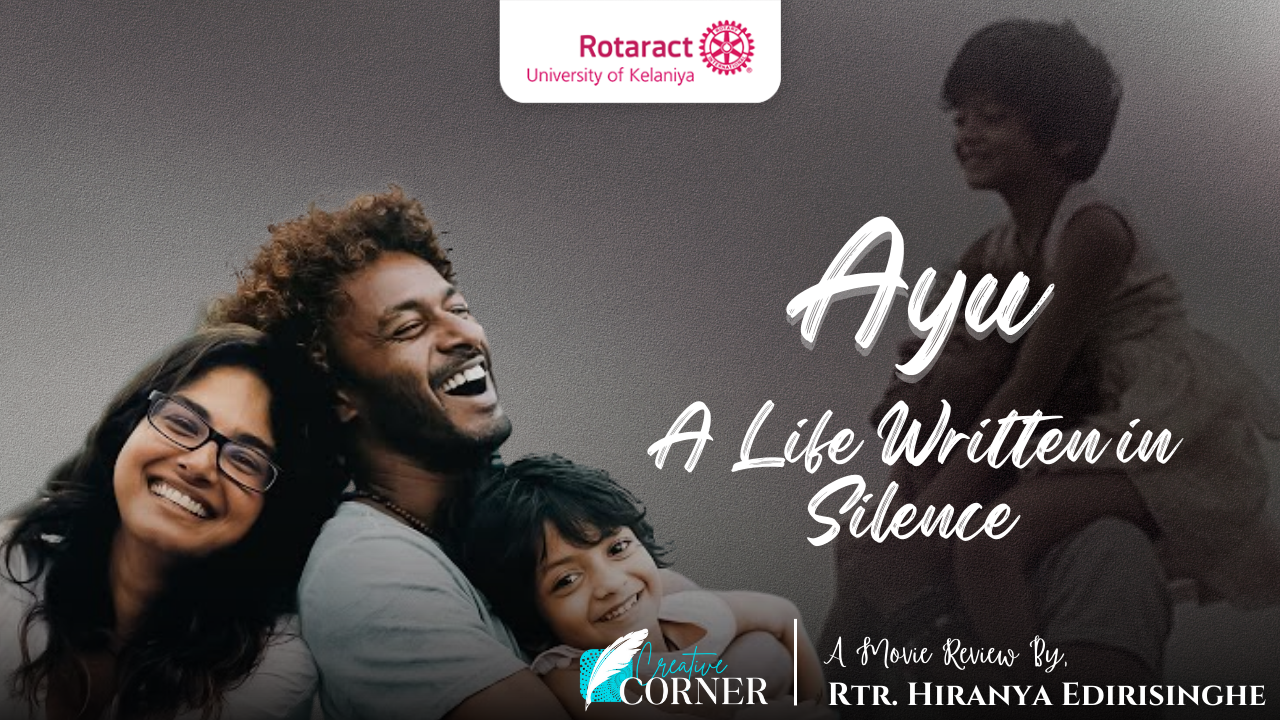
Ayu opens with a quiet sense of mystery. The sound of water, drop by drop, splashes onto a quiet surface. A child’s laughter drifts in. A paper wind fan clutched in small hands. Then, out of nowhere, a yellow butterfly appears, just as to show the grief turning to a glimmer of hope or the start of a better chapter. A child runs after it, and that simple, an ordinary moment becomes the opening of Ayu. A poetic sequence sets the tone without a dialogue, while a set of emotions driven in.
The butterfly later turning into a caterpillar, where the flashbacks commence without a single noise. Perhaps a symbol of another life with a complete family, something she once had perfectly. Fate, however, plays a cruel joke on that sense of perfection. Even though she is a doctor, she breaks down like anyone else, her vulnerability mirrored without a single break. She seeks companionship, yet nowhere within reach. Then comes the sudden accident; radical, shocking… leaving everyone stunned. She is taken to the ICU.
Her mother, who has always wished for a grandchild, stands beside her bed. The husband she once ran away to is there too when she opens her eyes. Yet no one knows that the one thing she urgently wants to share with him is the simplest and happiest news: a new member is about to join their family. What remains unspoken is the most important truth she wants to share.
The story then slips into a series of flashbacks. She is seen wandering along an unfamiliar coast, entering a bar that does not belong to her world. She drinks until she faints on the beach, wakes up in a stranger’s house and spends days roaming with someone she barely knows. Memories resurface slowly, uncover her inner conflict; the child who left without saying goodbye, the patients who disliked her approach, pushing her deeper into isolation and darkness.
The turning point of Ayu arrives when she suddenly discovers she is HIV positive. Her little nest collapses. Trust shatters. Even the mother who gave birth to her begins to look at her with disgust. What hurts most is not the diagnosis, but the attitude of those around her. Later, she learns the truth; when it is revealed that the infection occurred through a blood transfusion, the film confronts the audience with uncomfortable truths about judgment in daily life, misunderstanding which lit without a smoke and the misplaced blame. At that moment, what saves her life, made her lose her soul. Happiness simply slips away.
The house she once dreamed of remains an unreachable dream. Even at the end, she wants nothing more than to travel on that boat with him; a wish that leads the story into its most intense dramatic phase. He lies in the hospital ward like a fallen tree in the jungle, breathing his last. His fate is already written on the boat.
They are soaked by the same rain. Destiny plays its final, cruel joke. She loved children, yet she loses her baby…
The film concludes with quiet tragedy. They are soaked by the same rain, bound by the same destiny. She, who loved children deeply, loses her unborn child. The miscarriage, the HIV diagnosis and the emotional losses arrive one after another, giving Ayu its weight and making the narrative intense and unsettling. Ayu leaves the viewer reflecting on fate, love, judgment and the fragility of human connections, leading us to rethink the essence of companionship and the depth of human connections.
Penned by Rtr. Hiranya Edirisinghe