“The health of our planet depends on the actions we take today. Through Swabhasamudra 3.0, we transformed our commitment to environmental conservation into meaningful action, creating lasting impacts on both land and sea.”
The Environmental Service Avenue of the Rotaract Club of University of Kelaniya proudly launched Project Swabhasamudra 3.0, a comprehensive environmental initiative focused on conservation, innovation, and sustainability. Implemented through four impactful phases, the project addressed critical environmental challenges while creating meaningful and lasting change.
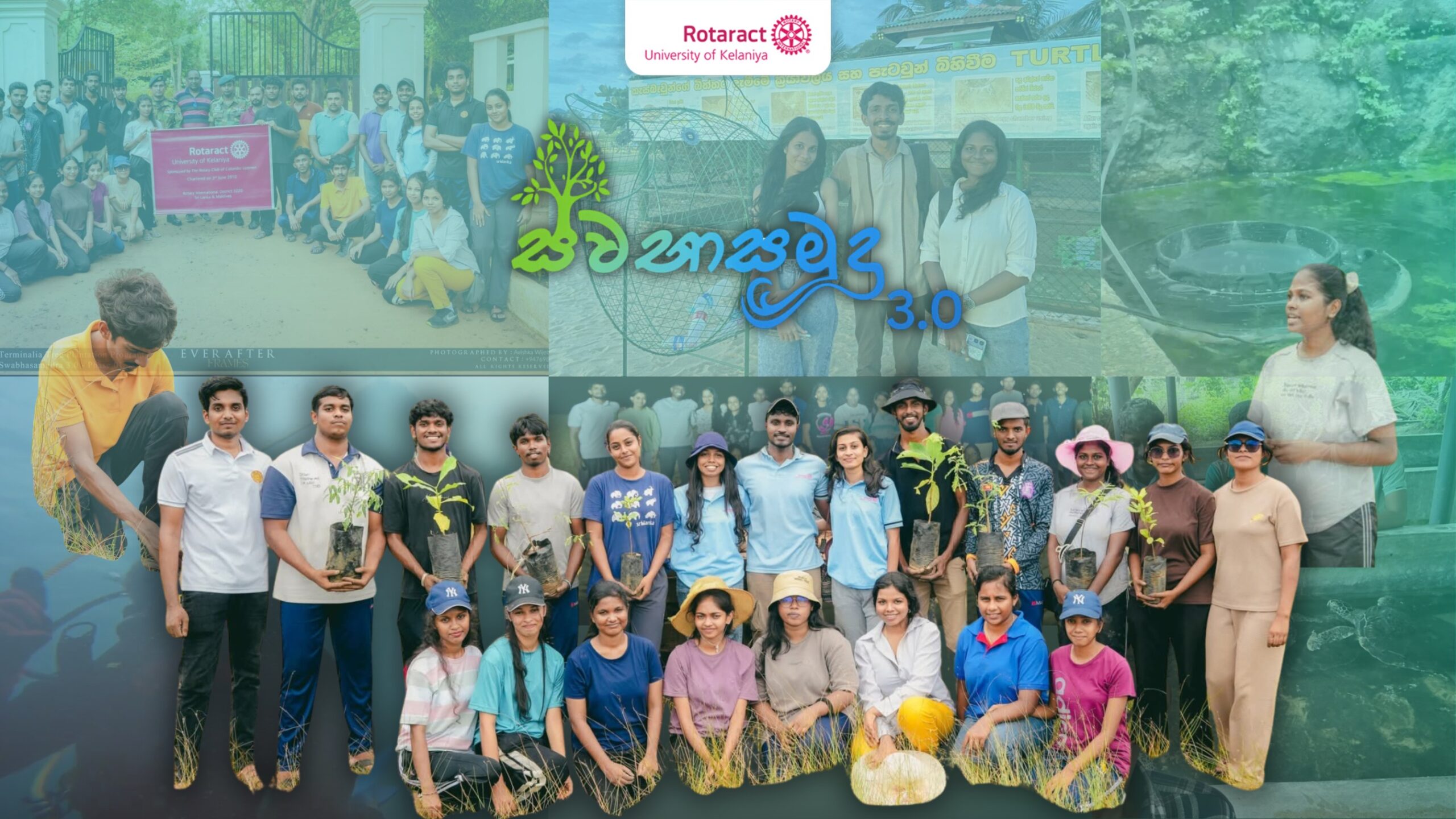
The project began in Pooneryn, Jaffna, where 1,200 indigenous and environmentally valuable trees, including Mee, Kumbuk, Burutha, Nuga, and Kohomba, were planted with the support of the Sri Lanka Forest Conservation Department, Sri Lanka Police, and Sri Lanka Army. Beyond increasing green cover, this initiative contributed to biodiversity conservation, ecosystem restoration, and long-term carbon absorption, creating environmental benefits that will continue for generations.
Marine conservation became the focus of the second phase. In partnership with the Sri Lanka Turtle Conservation Project in Panadura, Rotaractors participated in beach patrols, protected nesting sites, safeguarded turtle eggs, and witnessed hatchlings begin their journey to the ocean. Identifying beach pollution as a major threat to turtle survival, the team implemented a fish-shaped waste bin near the coastline. More than a waste disposal point, it served as a permanent awareness tool, encouraging responsible public behavior and helping create cleaner nesting environments for future generations of sea turtles.
The conservation effort extended to Kosgoda, where volunteers supported the rehabilitation of injured turtles by assisting with feeding, tank maintenance, and daily care. These contributions directly supported the recovery and survival of vulnerable marine wildlife.
The third phase introduced one of the project’s most significant achievements. For the first time at a university level in Sri Lanka, a Sea Bin was designed and implemented by a university innovation team. Successfully tested at Ragama Wetland Park, this innovation demonstrated a practical and sustainable approach to intercepting floating waste before it reaches rivers, wetlands, and ultimately the ocean. The initiative showcased how youth-led innovation can contribute to solving real-world environmental problems.
The final phase tackled a frequently overlooked issue, underwater pollution. Partnering with Pearl Protectors, six licensed divers conducted a seabed cleanup at Palagala Reef, Colombo, removing 40 kg of ghost nets and 35 kg of plastic waste. This effort helped protect marine biodiversity, reduce threats to aquatic life, and preserve the health of fragile reef ecosystems.
Swabhasamudra 3.0 was more than an environmental project. It was a movement that united ecosystem restoration, wildlife conservation, technological innovation, and marine protection under one vision. From planting trees and protecting sea turtles to pioneering sustainable solutions and restoring underwater habitats, the project demonstrated the power of collective action in creating a cleaner, greener, and more sustainable future for Sri Lanka.