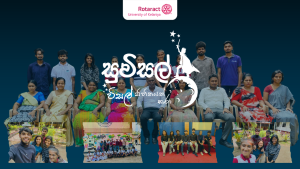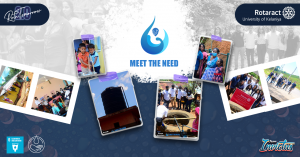
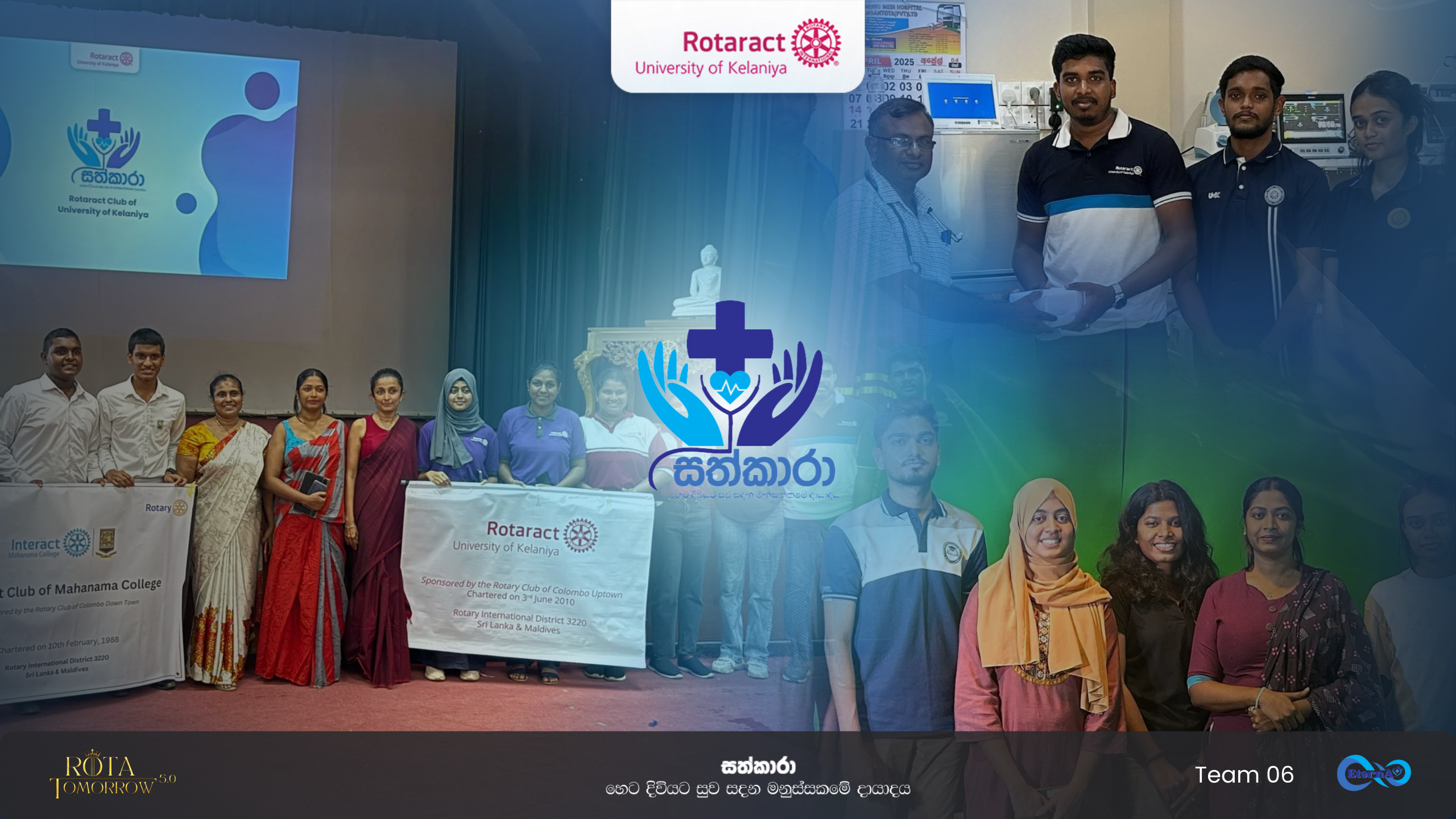
In a world where healthcare is often a privilege, the Sathkara project, organized by the Rotaract Club of University of Kelaniya, set a strong example of care, education, and social responsibility. With a focus on disease prevention and the holistic well-being of the community, the project was implemented in two impactful phases, reaching out to different target groups – from urban youth to marginalized rural populations.
The idea for Sathkara was born out of the urgent need to make health education – both physical and mental, which was accessible to all. After intensive research and discussions with medical professionals, key problem areas were identified: a lack of knowledge about disease prevention among young people, a lack of discussion about mental illnesses such as depression or dementia, and a severe lack of medical resources in rural areas. To address these challenges, Sathkara was launched as a two-phase project with targeted interventions.
The first phase focussed on the physical and spiritual awareness of young people. In collaboration with Mahanama College Colombo 03 and its Interact Club, the project team organized a comprehensive awareness session after a productive conversation with the headmaster to understand the needs of the students. The students were divided into two groups: From Years 6 to 8, the focus was on obesity, while Years 9 to 11 covered topics such as mental well-being, puberty, and mental health. The sessions were led by Dr. Vindya Rajakaruna and Ms. Kalpa Ranasinghe, a counselor at the Faculty of Medicine, University of Kelaniya. After the event, the students received information material to reinforce and share what they had learned.
But the commitment did not end in the classroom. To reach a wider audience, a two-part YouTube series was rereleased with Ms. Kalpa Ranasinghe, discussing two important but often ignored topics: Depression, a growing burden especially for young people, and dementia, a condition that is often silently endured. These videos were aimed at young people as well as older people and were disseminated via social networks, a deliberate move to break down barriers and provide low-threshold knowledge.
With a strong desire to go beyond the confines of the urban area, the second and final phase took place in Ambilipitiya. A team from the project visited the Sewanagala Divisional Hospital to identify the acute shortage of medical equipment in dialogue with the medical staff. The hospital, which treats around 100-200 patients a day, then received urgently needed medical equipment to support the work of the clinic in the long term. This phase was a symbol of true solidarity and brought the project to a meaningful conclusion.
Sathkara was far more than a health project. It was a reflection of empathy, responsibility, and a deep desire to empower society with knowledge and compassion. It brought young people together with professionals, schools, health facilities, and media to create a space where education was not only communicated but also experienced. With far-reaching impact, strategic implementation, and passion, Sathkara sets a shining example of what engaged youth can achieve today.