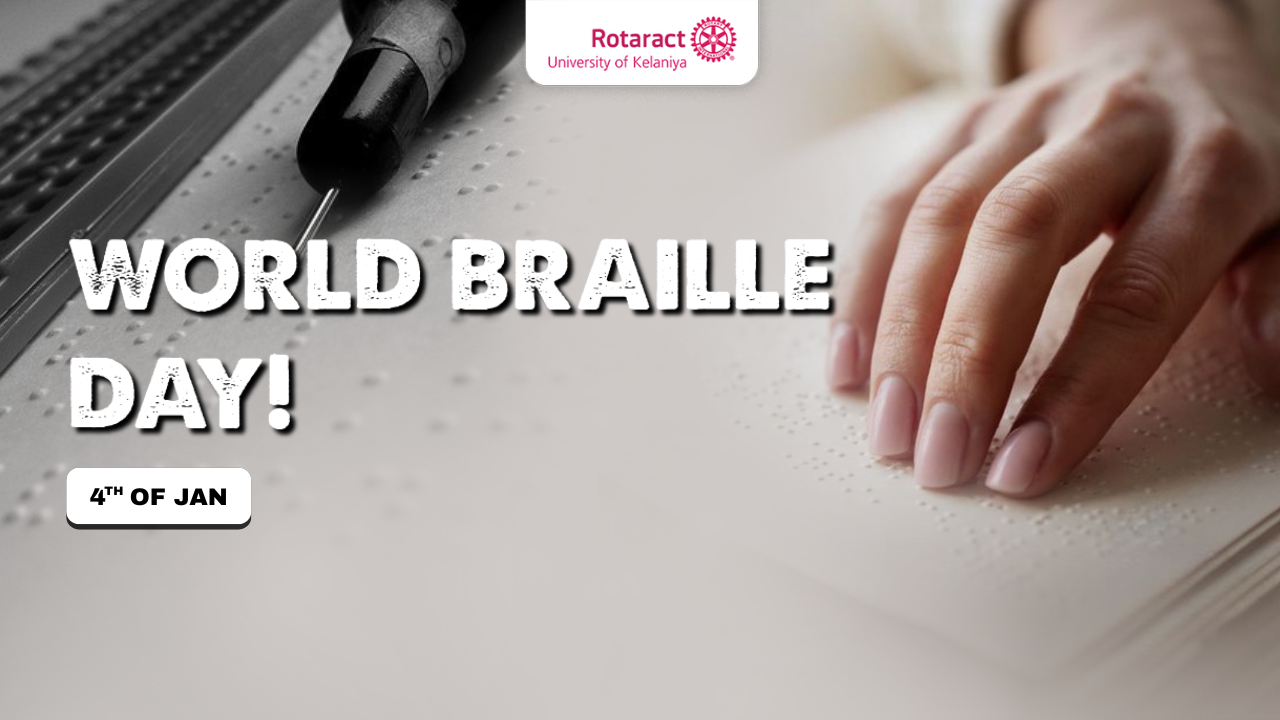
Not every story is read with the eyes. Some are felt quietly, patiently, meaningfully.
On the surface, letters are just shapes; Curves, lines, dots. But for millions of people around the world, letters are felt, not seen. They are read through fingertips, understood through touch and carried straight to the heart. This is what Braille means, not just a system of writing, but a doorway to independence.
World Braille Day, observed on January 4th, marks the birth anniversary of Louis Braille, the young French boy who lost his sight at an early age and later changed the lives of millions. What he created was simple, yet revolutionary: a system of raised dots that allowed visually impaired individuals to read, write, learn and dream on their own terms.
Before Braille, access to education for the blind was limited and slow. Learning depended on others. But Braille changed that. Suddenly, books could be explored independently. Notes could be taken. Knowledge was no longer something borrowed, it became something owned.
Yet, World Braille Day is not only about celebrating a writing system. It is about recognizing dignity. Braille represents equality, accessibility and the right to information. It reminds us that inclusion is not charity, it is a responsibility.
In today’s digital world, some assume Braille is becoming outdated. But the truth is quite the opposite. Braille remains essential, especially for literacy. Audio can tell a story but Braille teaches spelling, punctuation and structure. It builds confidence and strengthens education. From elevator buttons to medicine labels from classrooms to technology, Braille quietly supports daily life in powerful ways.
This day also invites us to reflect. How often do we think about accessibility when we design spaces, events or content? How often do we ensure that everyone, regardless of ability, feels seen, respected and included?
World Braille Day is a reminder that progress is not only about speed or innovation. It is about empathy. It teaches us to slow down, to notice and to understand perspectives different from our own. Because sometimes, the most powerful stories are not read with the eyes, they are felt with the fingertips


