
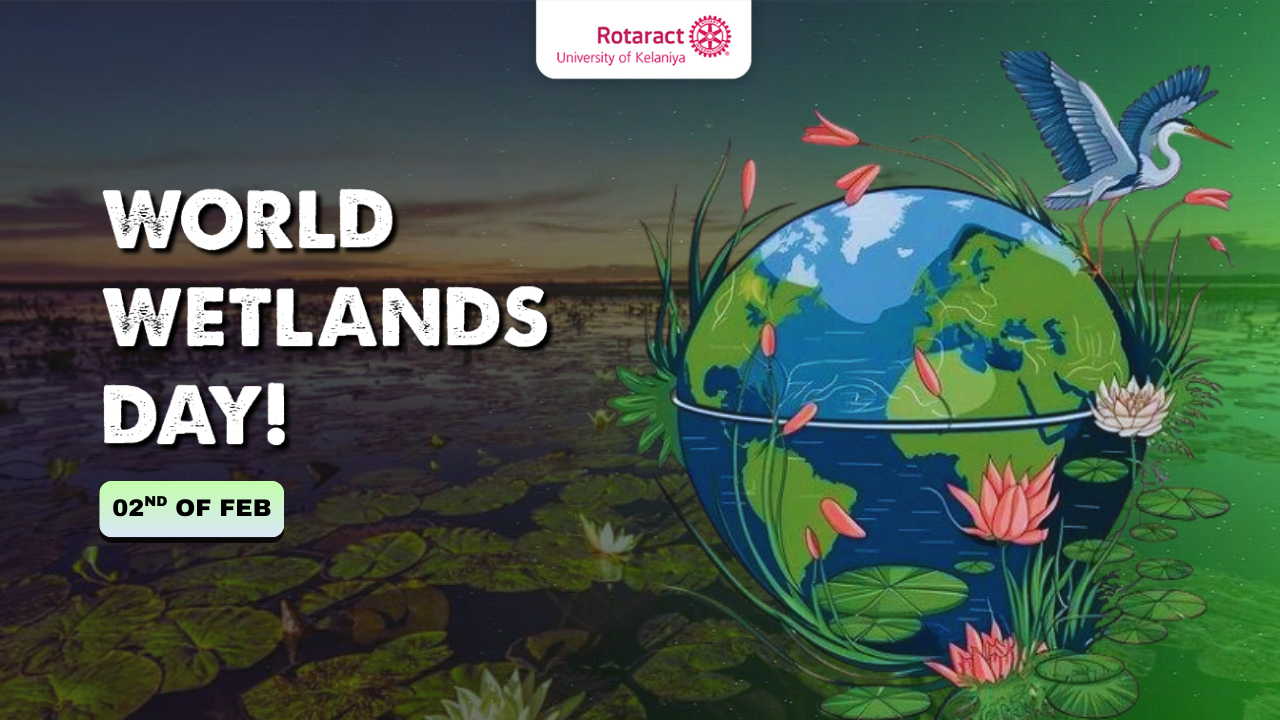
They don’t shout for attention but the world depends on them.
Wetlands are among the most overlooked yet vital ecosystems on the planet. Existing where land and water meet, these spaces marshes, mangroves, swamps, floodplains and lagoons, quietly support the natural balance that sustains both people and wildlife. World Wetlands Day invites us to recognize the importance of these ecosystems and reflect on our role in protecting them.
Wetlands function as nature’s safety net. They absorb excess rainwater, reducing the risk of floods and protecting surrounding communities. At the same time, they act as natural filters, trapping pollutants and improving water quality before it reaches rivers, lakes and oceans. During dry periods, wetlands release stored water slowly, helping ecosystems survive changing climate conditions.
These environments are also rich in life. Wetlands provide habitats for countless species, including fish, birds, insects and plants, many of which are found nowhere else. Migratory birds rely on wetlands as resting and feeding grounds during long journeys, while coastal wetlands protect shorelines from erosion and storm surges. When wetlands are healthy, biodiversity flourishes.
Beyond their environmental value, wetlands support human livelihoods. Many communities depend on them for fishing, agriculture and traditional practices rooted in generations of coexistence with nature. Wetlands contribute to food security, income and cultural identity, making their preservation essential not only for nature but for people as well.
Despite their importance, wetlands continue to disappear rapidly due to pollution, land reclamation, unsustainable development and climate change. Each loss weakens the natural systems that protect us, often in ways that are only noticed when it is too late.
World Wetlands Day serves as a reminder that conservation begins with awareness and responsibility. Simple actions, reducing waste, conserving water, supporting sustainable practices and respecting natural habitats can collectively make a powerful difference.
Wetlands may exist quietly, but their impact is profound. By protecting them today, we ensure that future generations inherit a world where water, life and balance continue to thrive together.