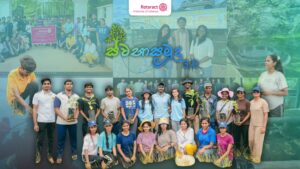
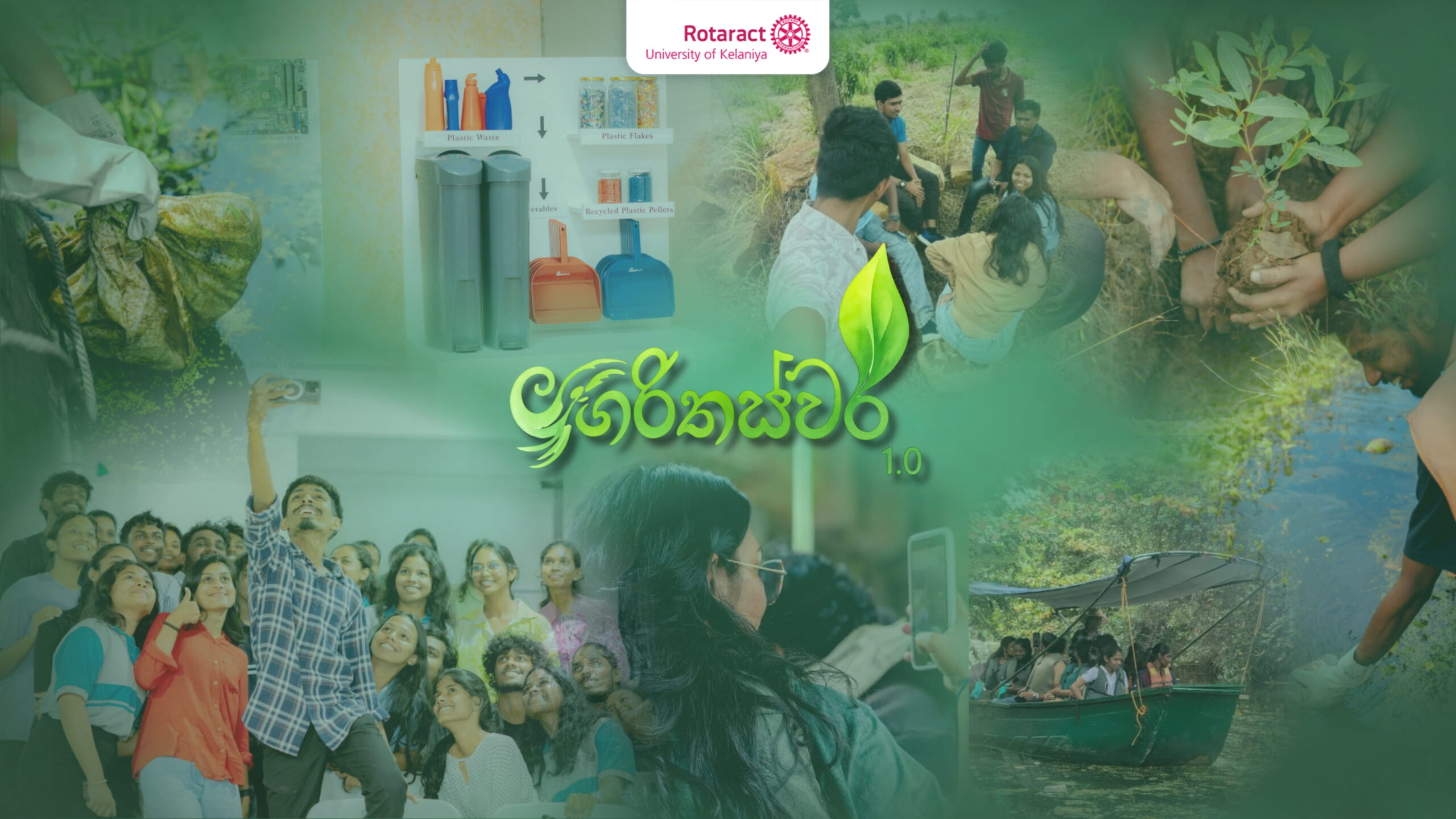
Environmental challenges cannot be solved through awareness alone, they require action, innovation, and sustainable solutions. With this vision, the Environmental Service Avenue of the Rotaract Club of the University of Kelaniya launched Harithaswara 1.0, a first-of-its-kind initiative dedicated to biodiversity protection, waste management, and wildlife conservation.
The project commenced at the Muthurajawela Wetland, one of Sri Lanka’s most valuable ecosystems. In collaboration with the Muthurajawela Visitor Center, Rotaractors carried out a wetland cleanup, removing approximately 130–150 kg of waste from the environment. During the initiative, it became evident that household waste disposal was a major contributor to pollution within the wetland ecosystem. To address this challenge beyond a one-day cleanup, the project implemented a categorized waste bin system, providing a sustainable solution that encourages proper waste segregation and responsible disposal practices. This effort contributed to protecting biodiversity while preserving a critical habitat for countless plant and animal species.
The second phase focused on empowering the next generation of environmental innovators through ECOFIX’26, a waste management innovation competition for school students. Bringing together seven competing school teams from the Kelaniya area, the competition encouraged participants to develop practical and sustainable solutions to modern waste management challenges. Fully sponsored by Cleantech Pvt Ltd, ECOFIX’26 transformed students from environmental observers into environmental problem-solvers, inspiring creativity, critical thinking, and a sense of responsibility toward building a greener future.
The final phase addressed one of Sri Lanka’s most pressing wildlife conservation challenges—the human-elephant conflict. Moving beyond conventional approaches, Harithaswara 1.0 introduced an innovative Bee Sound System, designed as a sustainable and non-harmful solution to deter elephants from entering cultivation lands. The first pilot implementation was carried out in Sooriyawewa, where the system was tested in an agricultural area vulnerable to elephant intrusions. By promoting coexistence between humans and wildlife, this innovation demonstrated how technology can be used to reduce conflict while protecting both livelihoods and biodiversity.
Harithaswara 1.0 was more than an environmental project, it was a platform for sustainable change. From restoring wetland ecosystems and promoting responsible waste management to encouraging youth innovation and introducing wildlife conservation technology, the project addressed environmental challenges through practical and lasting solutions.
As the inaugural edition of the initiative, Harithaswara 1.0 laid the foundation for a future where conservation is driven not only by awareness, but by action, innovation, and commitment. Through every phase, the project amplified nature’s voice and reinforced the importance of creating a harmonious relationship between people and the environment.