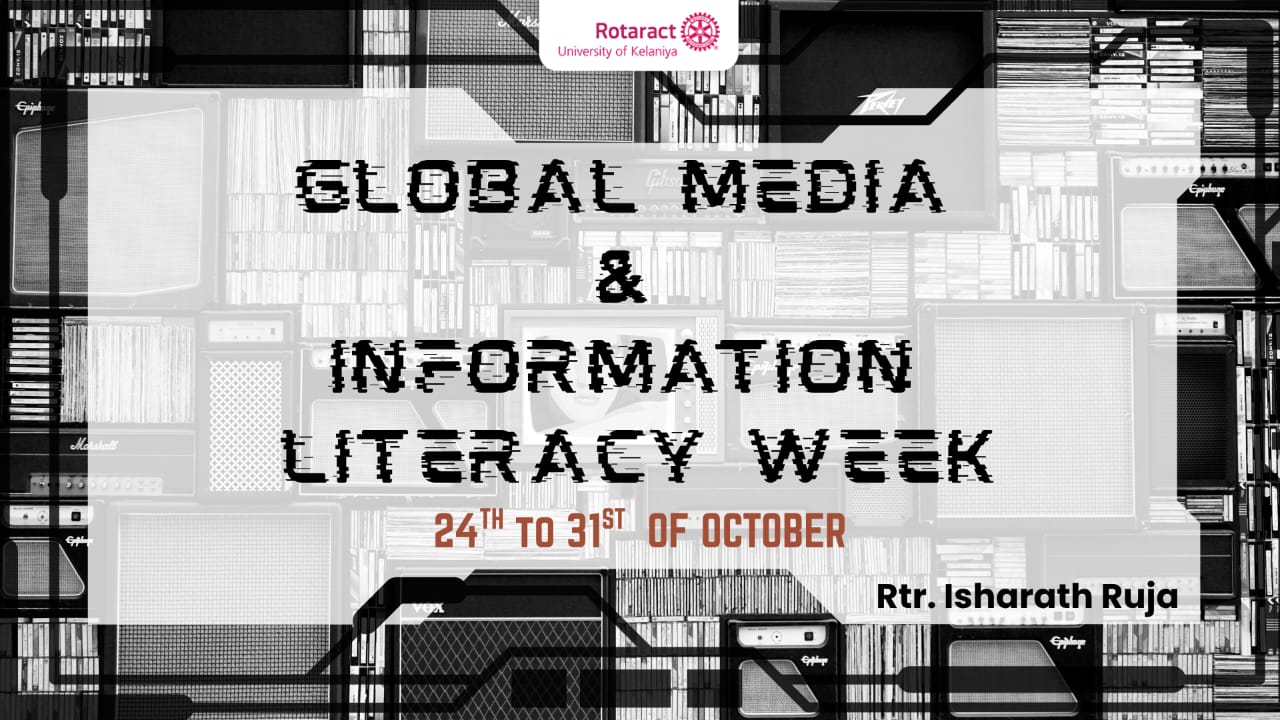
Global Media and Information Literacy Week is a global initiative that highlights the importance of developing the knowledge and skills needed to access, analyze, evaluate and use information responsibly. The week is observed annually from 24th to 31st of October, the initiative is led by UNESCO to promote media and information literacy among individuals and communities worldwide. In today’s digitally connected society, where information spreads within seconds, the ability to distinguish credible information from misleading content has become more important than ever.
The 2026 theme, “We All Play a Part – Media and Information Literacy for the People,” emphasizes that creating an informed society is a shared responsibility. Individuals, educational institutions, media organizations, policymakers and communities all have an important role in promoting critical thinking, responsible communication and access to reliable information. The theme reminds us that every individual contributes to the information environment through the content they consume, create and share.
In an era dominated by social media and artificial intelligence, misleading headlines, manipulated images and AI-generated content can spread rapidly, shaping opinions and influencing decisions before the truth comes to light. Media and information literacy empowers us to pause, question and verify rather than blindly believe everything we encounter online. By examining the credibility of sources and checking facts before liking, commenting on or forwarding a post, we can help prevent the spread of misinformation and foster a more trustworthy digital environment.
The power to create a more informed digital world lies not only in the hands of media organizations or policymakers but also in the hands of each one of us. During Global Media and Information Literacy Week, awareness campaigns, educational programs, workshops and public discussions are organised worldwide to promote critical thinking, responsible media use and the importance of identifying reliable information. Young people and educational institutions play a vital role in combating misinformation by promoting critical thinking, digital responsibility and ethical information sharing, contributing to a more informed society.
Think critically, share responsibly and be part of the solution because a better digital world begins with informed minds and responsible actions.