81 Years of Hope, Doubt and the Search for Trust; A Reflection for “United Nations Day 2026”
Sometimes I wonder what the word “peace” means to people who have never truly experienced it. Is it simply the absence of war? Or is it also the freedom to go to school without fear, to speak without being silenced, to have enough food and to believe that tomorrow may be kinder than today? Perhaps the meaning of peace changes from one person to another. But the need for it is something we share.
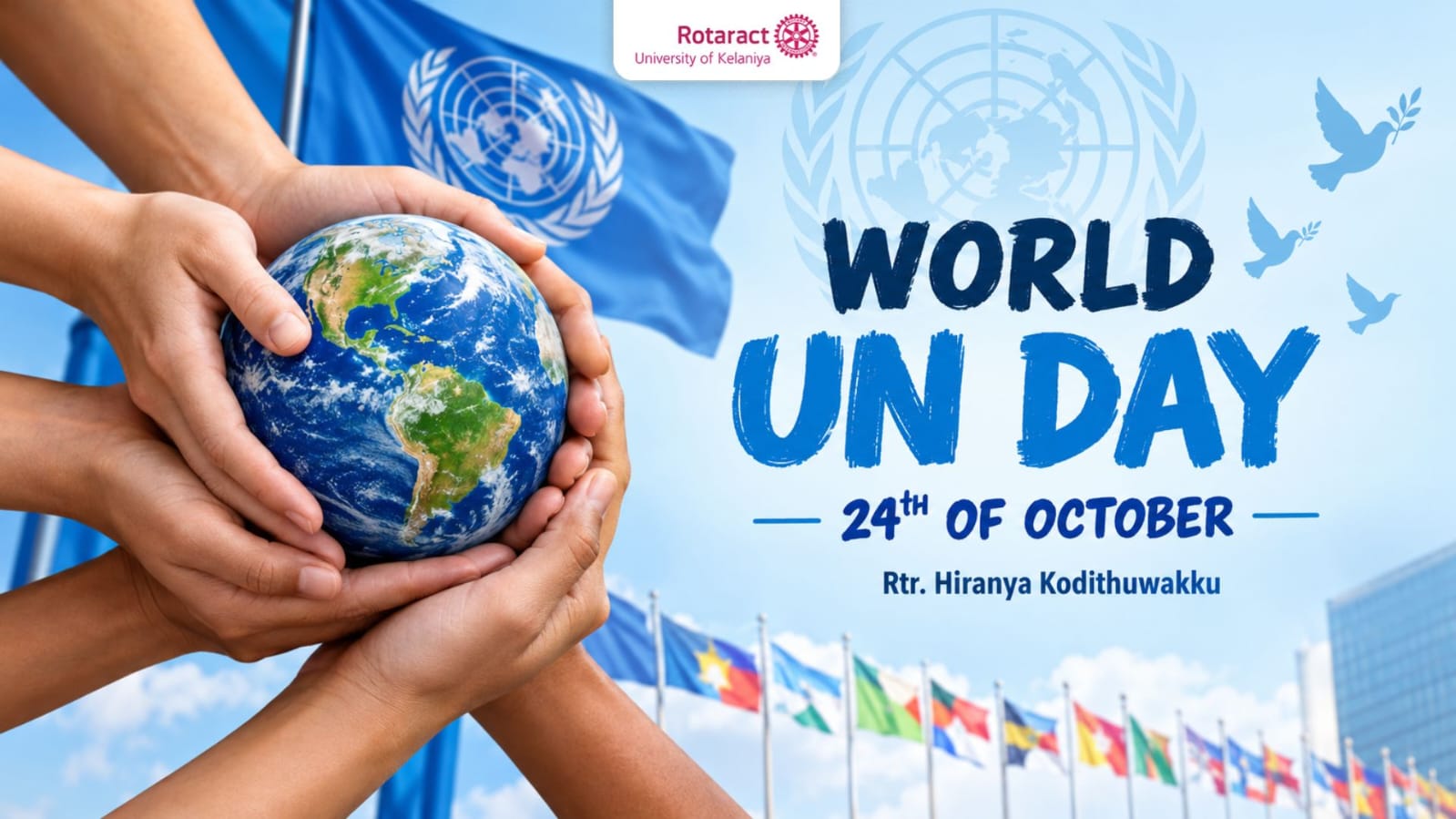
On 24th of October 2026, the world marks 81 years since the United Nations Charter came into force. The United Nations was born in the shadow of a devastating world war, when countries had seen what hatred and division could do to human lives. Its hope was clear: nations needed a place to talk, cooperate and work towards a world where future generations would not inherit the same destruction.
Yet, after 81 years, how do we measure the success of an organization created to protect humanity? Is it by the number of meetings held, declarations signed or speeches delivered? Or should we measure it by the lives that become safer, the children who gain access to education, the families who receive help in a crisis and the people who finally feel that their voices matter?
Knock on your heart and you will know the definite answer!
I do not think the story of the United Nations can be told through praise alone. For many people, it represents hope: a place where countries can come together, humanitarian work can cross borders and human rights remain part of the global conversation. For others, the UN can seem distant, slow or unable to act decisively when conflicts continue and powerful interests stand in the way. Perhaps these different views reveal the same expectation: people want promises made in the name of humanity to become real in human lives. Isn’t it?
This is why the 2026 theme, “Restoring Trust, Managing Transformation: A United Nations That Delivers for All,” invites more than celebration. It asks for reflection. Trust cannot be demanded simply because an institution has a respected name or a long history. Trust grows when words are matched by action, mistakes are acknowledged and support reaches people who are too often overlooked. If the promise is to deliver for all, then “all” must mean more than the most powerful countries or the people whose struggles attract the most attention.
Today’s technology is reshaping how we communicate, climate pressures are affecting communities, conflicts are displacing families and inequality continues to influence people’s opportunities. Progress means little if it leaves people behind. A world can become more advanced and still become less compassionate.
Global change is not something that happens only in conference halls or between national leaders. It is also shaped by ordinary people; the person who helps a neighbour, the volunteer who gives time to a community, the teacher who opens a door through education and the youth who chooses to listen instead of judge. These actions may seem small compared with global challenges, but they are part of the cooperation that international institutions are meant to encourage.
For me, “a United Nations that delivers for all” must begin with a simple principle: no person should become invisible because of where they were born, the language they speak, the resources they lack or the circumstances they cannot control. International cooperation should not remain as an abstract idea. It should be felt in classrooms, hospitals, homes and communities, and in the everyday choices that allow people to live with dignity.
Perhaps restoring trust does not begin by asking the world to believe in the United Nations again. Perhaps it begins by asking the UN, its member states and all of us to keep earning that trust. That means listening more carefully, acting more fairly, accepting responsibility and measuring progress not only by intentions but by outcomes. No organization can build a peaceful world alone. Governments have responsibilities, institutions have responsibilities and people have responsibilities too.
Eighty-one years ago, the world made a promise in the aftermath of immense suffering. That promise has faced disappointments and difficult tests, but its central question still remains urgent: can we learn to work together before our differences become another generation’s tragedy? “United Nations Day” should be more than a date on the calendar. It should be a moment to examine the distance between the world we have and the world we keep promising one another.
I do not believe hope means pretending that everything is working. Real hope is honest enough to recognize failure and brave enough to keep demanding better. After 81 years, perhaps the most important question is not whether the world still needs the promise of unity. It is whether we are willing to make that promise meaningfully together.
Not for a promise itself, but for a better tomorrow that belongs to all…