
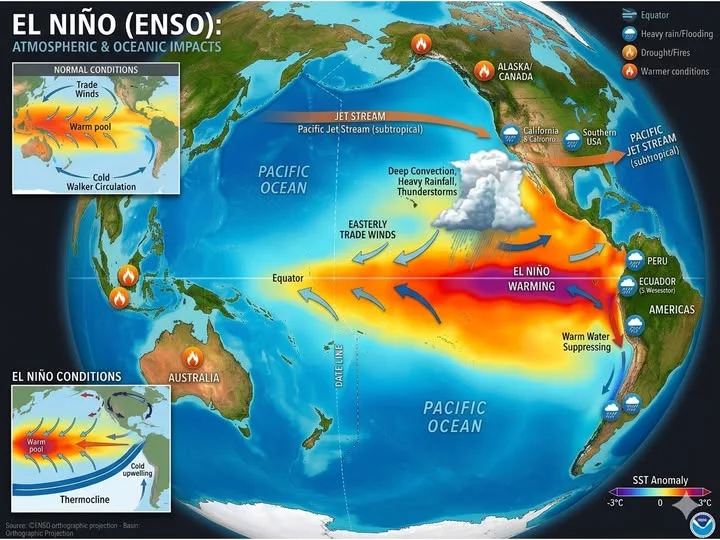
El Niño is a recurring climate phenomenon in which unusually warm sea-surface temperatures develop in the central and eastern tropical Pacific Ocean, disrupting atmospheric circulation and influencing weather patterns far beyond the Pacific. In 2026, El Niño has emerged as a major global climate concern. Forecasts indicate that the event is likely to strengthen significantly towards the end of the year. Sri Lanka, as a tropical island whose agriculture, water resources, energy production and livelihoods depend heavily on seasonal rainfall, is particularly vulnerable to these changes.
According to Sri Lanka’s Department of Meteorology, El Niño conditions were expected to emerge during June-August 2026 and persist through at least the end of the year. By July, the probability of a very strong El Niño during October-December had reached 81 percent according to NOAA forecasts. International climate models also indicate that the 2026 event could become exceptionally strong.
For Sri Lanka, the most important consequence is greater rainfall variability rather than simply less rainfall. The Department of Meteorology has reported that the strengthening El Niño has already contributed to a weakening of the southwest monsoon and increased heat stress. Consequently, some parts of the country may experience prolonged dry spells during the middle of 2026. Reduced rainfall can place pressure on reservoirs, irrigation systems and drinking-water supplies while increasing risks to agriculture. Farmers may face difficulties in planning cultivation because the timing and distribution of rainfall become less predictable.
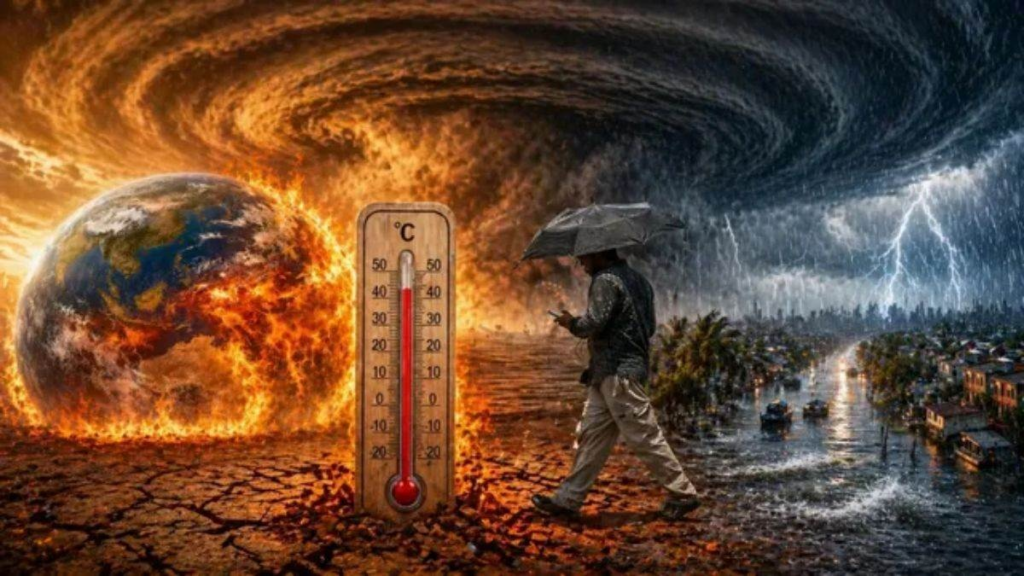
However, El Niño does not mean that Sri Lanka will experience continuous drought. Historical evidence shows that El Niño can produce contrasting rainfall patterns across different months and regions. Sri Lanka’s Meteorological Department has indicated the possibility of above-normal rainfall during parts of October-December, potentially creating conditions for intense rainfall, flooding and landslides. Thus, the country could face a challenging sequence of dry conditions followed by episodes of excessive rainfall.
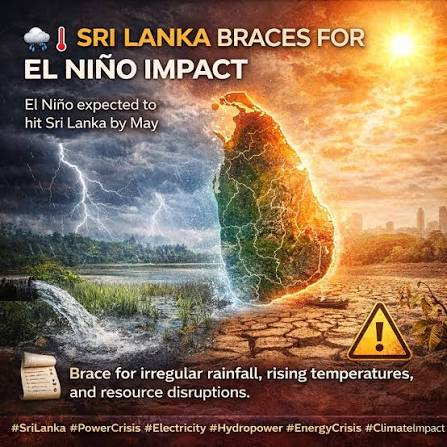
The economic consequences could be substantial. Agriculture may be affected by both water shortages and sudden heavy rainfall, while hydropower generation could become more uncertain because electricity production depends partly on reservoir levels. Higher temperatures may also increase cooling demand and place additional pressure on households and businesses. Food prices could rise if weather disruptions reduce agricultural production, while fisheries and coastal ecosystems may also be affected indirectly by changing oceanic and atmospheric conditions.
Recognizing these risks, the Sri Lankan Government established special committees to coordinate preparations for El Niño across sectors. This demonstrates that the phenomenon is not merely a meteorological issue but a national economic, social and disaster-management challenge.
Ultimately, El Niño 2026 should be understood as a warning to strengthen Sri Lanka’s climate resilience. Effective water management, climate-smart agriculture, improved early-warning systems, disaster preparedness and continuous monitoring of rainfall and temperature are essential. The greatest lesson is that Sri Lanka must prepare for climate uncertainty rather than a single predictable outcome. With timely planning and coordinated action, the country can reduce the risks posed by El Niño while protecting vulnerable communities and critical economic sectors.